
Ukraine’s Fall From Grace: How a World Leading Military Industrial Power Devolved Into a Dependant on Western Aid
Military Watch Magazine Editorial Staff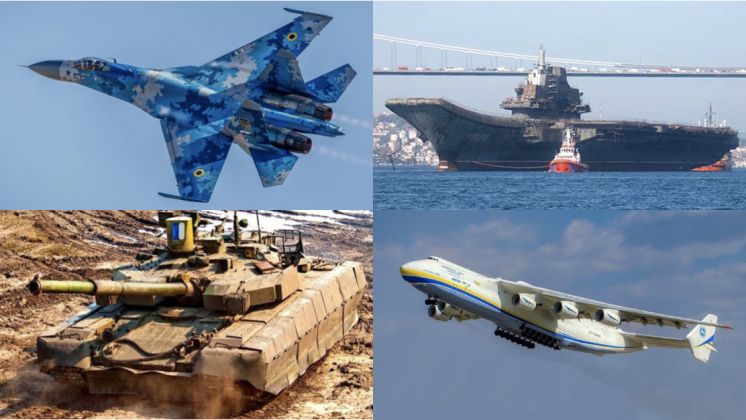
Ukrainian Su-27, Carrier Varyag, An-225, T-84 (clockwise from top left)
The Ukrainian Republic was established as a separate state in December 1991 following the disintegration of the Soviet Union, and after Russia and Kazakhstan it was the third largest of 15 Soviet successor states which was seen by many to have a promising future as a major industrial power. Under the Soviet Union, Ukraine had been one of the superpower’s most heavily industrialised regions, and the new republic not only inherited a disproportionate quantity of the Soviet conventional and nuclear arsenals including over 1000 nuclear warheads, but also a massive part of the Soviet defence sector and of its civilian technological sector. Upon its formation Ukraine had the world’s third largest nuclear arsenal, a formidable fleet of supersonic intercontinental range strategic bombers, and factories producing a wide range of advanced weapons systems. The Soviet Union’s two primary heavy battle tanks, the T-80 and T-64, which had both never been offered for export, were largely manufactured on Ukrainian territory which represented just one of several potentially lucrative world leading industries now focused on the land of a relatively small new state.
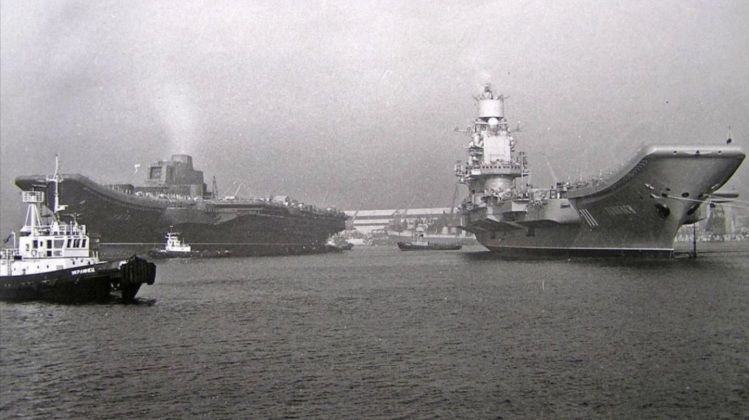
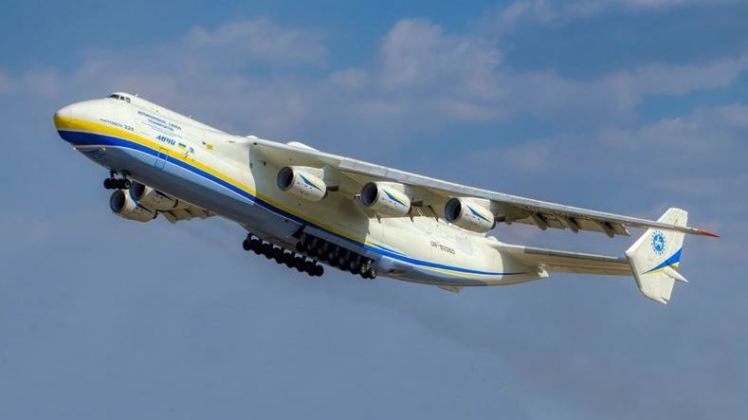
Technologies relating to intercontinental range ballistic missile engines and the Soviet space program were also highly sought after worldwide, not only by states with burgeoning missile programs such as Iran and North Korea but also by Russia itself. Ukraine in the Soviet era had also housed the world’s only shipyard outside the United States capable of building supercarriers, and was in the process of doing so when the state collapsed with nuclear powered the Ulyanovsk Class ships which displaced over 85,000 tons scrapped. Ukrainian shipyards had some of the greatest capacities in the world, with its Black Sea Shipyard alone laying down two Kuznetsov Class carriers, four Kiev Class carriers and two Moskva Class helicopter carriers among other warship types. Ukraine’s Antonov Design Bureau produced some of the most sophisticated aircraft in the world, including the world’s largest aircraft the Antonov An-225 which first flew in 1988. Numerous factories which had housed the Soviet electronics industry and built systems from ship engines to air to air missiles were also inherited by Ukraine, giving it one of the world’s foremost industrial bases particularly in the military sector.
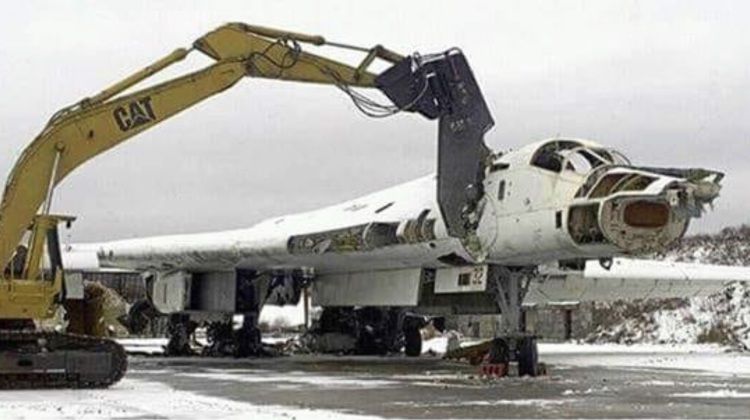
Despite its significant potential, Ukraine’s armed forces and more generally its industrial have been in decline for three decades due largely to severe corruption and mismanagement. The country would make a number of arms sales in the 1990s and would become a leading source of low cost high end technologies for China in particular, but also reportedly for North Korea and Iran from cruise missiles and armoured warfare to air defences and space technologies. Despite significant potential to become a major long-term arms supplier for China in particular, political changes in Ukraine led it to quickly fall into the Western sphere of influence - with the Untied States exerting considerably pressure on the country not to go ahead with some of the more lucrative possible arms deals. Most notable among these was the sale of Tu-160 bombers to China, which would likely have been accompanied by contracts for modernisation and refurbishment, technology transfer contracts for associated air launched missiles, and possibly even long term support to produce similarly capable bombers in China.
The Tu-160 was widely considered the most capable bomber in the world at the time, and Western pressure on Ukraine ultimately forced Kiev to scrap its highly prized aircraft and sell a portion of them on to Russia. A similar trend could be seen in Ukrainian shipbuilding, with Western intervention causing considerable difficulties for Ukrainian efforts to sell a partially completed Kuznetsov Class carrier on to China. This forced the Chinese to purchase the ship it through a private company for just $20 million, ending prospects for lucrative technology transfers and other assistance which would have been highly beneficial to both parties.
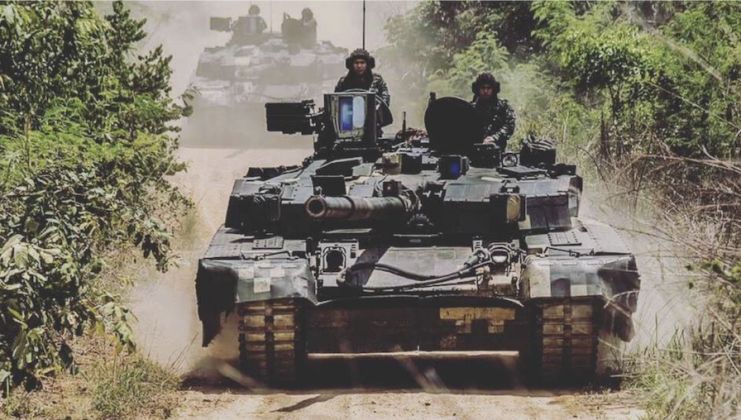
Attempts to establish the country as a major producer of battle tanks would ultimately fall far short, despite pursuit of an upgraded T-80 variant under the T-84 Oplot program. Thailand would come to place an order for T-84 tanks in the early 2010s, largely in response to Western pressure not to acquire the more advanced and lower maintenance T-90 platforms from Russia, although Ukraine’s failure to meet the terms of its contract not only led the Thai Defence Ministry to end plans for future purchases - but also deterred possible future clients meaning Ukraine’s tank industry is likely to die a slow death in the coming years. Economic crisis has meant that even for domestic use, there are almost no T-84 units in service - with almost all Ukraine’s tank units relying on ageing T-64 platforms inherited from the Soviet Union with a few of the newer, but still Soviet era, T-80 platforms forming elite units. The fact that the T-64 has fared extremely poorly in combat with separatist forces in the country, despite being upgraded with the latest armour protection systems, has reflected very poorly on the Ukrainian defence sector.
Ukraine’s armed forces today have seen few improvements to their capabilities since the Soviet collapse, relying on the same fleet of Soviet built MiG-29 and Su-27 platforms which, while world leading for their time, have received relatively few upgrades relative to their counterparts in Russia, India and elsewhere. Lacking technologies from active radar guided air to air missiles to up to date sensors or electronic warfare systems, the Ukrainian Air Force today faces a massive qualitative disparity relative to Russia, or even to Belarus or Kazakhstan which have continued to cooperate with Moscow to jointly modernise their assets. The situations in the Navy and Army are little better.
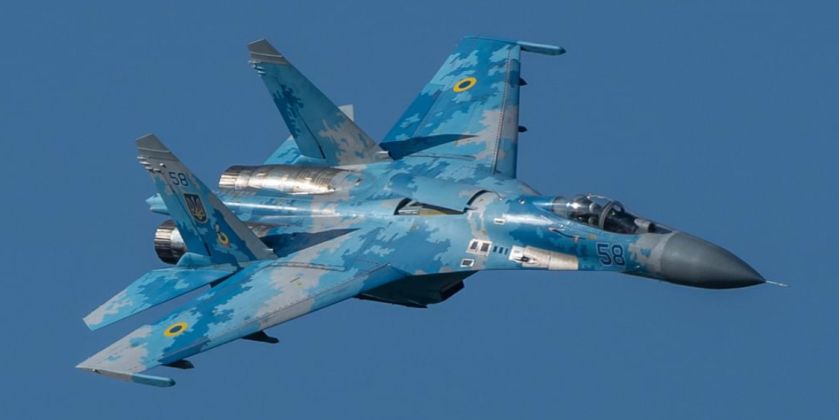
When the Soviet Union collapsed Ukraine boasted 176 ICBMs (130 SS-19 and 46 SS-24), 43 strategic bombers (23 Tu-95 and 20 Tu-160), 241 tactical bombers (90 Tu-16, 70 Tu-22, 81 Tu-22M), 20 ll-78 aircraft for aerial refuelling, 245 Su-24 strike fighters, 80 modernised MiG-25 heavyweight interceptors and 260 MiG-29 and Su-27 fourth generation fighters - among numerous other assets. This impressive inventory, which was paired with a similarly advanced and massive navy and ground force, placed Ukraine in a league of its own militarily, well ahead of Japan, China or any of the European powers and behind only the U.S. and Russia. The much weaker state of the country’s armed forces today, which are increasingly reliant on Western aid, have begun to consider purchases of obsolete second hand U.S. hardware and could soon rely on light Chinese trainer jets to provide the only modern aircraft in its inventory, thus bears testament to one of the most dramatic falls from grace in modern military history.
